

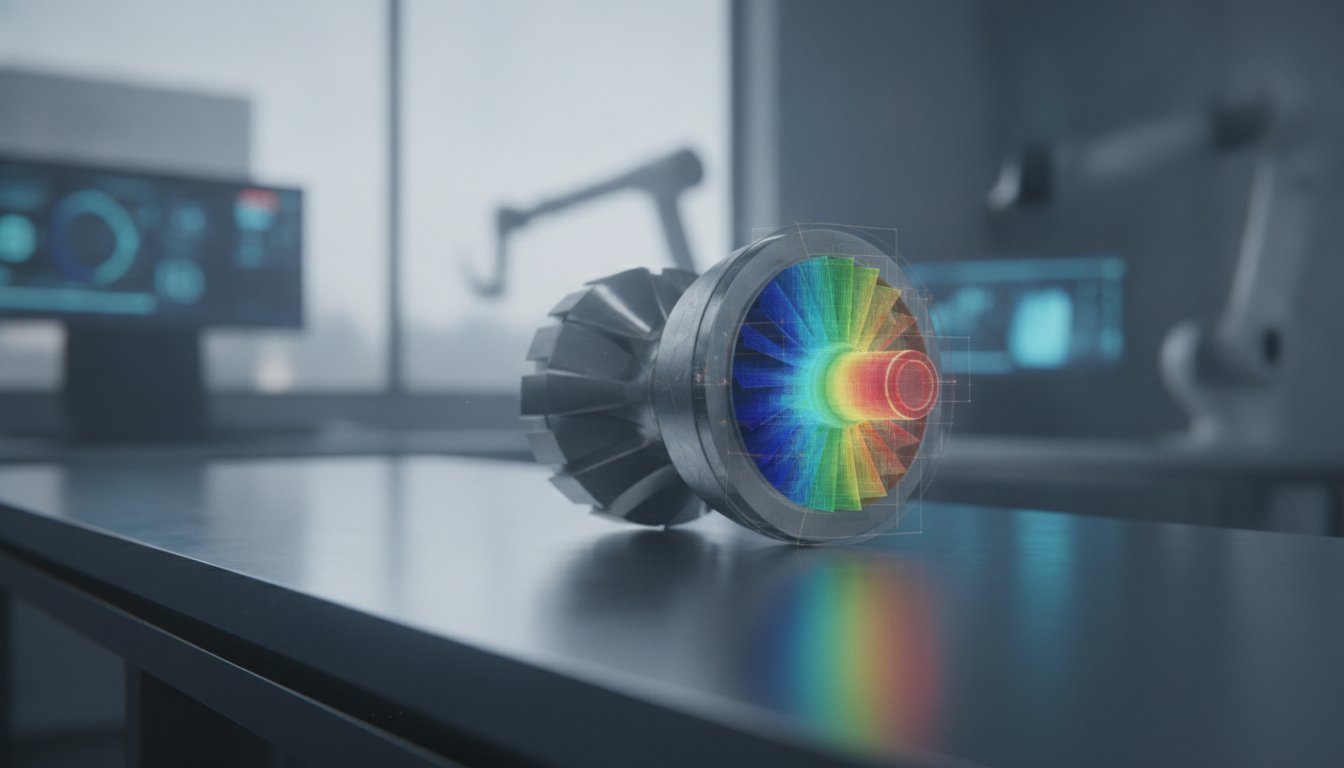
Physical prototyping isn’t the gold standard for validation anymore; it’s a legacy bottleneck that drains R&D budgets. While traditional engineering consultancies often struggle with excessive lead times, industry reports indicate that 68% of firms have already pivoted toward digital-first validation to maintain a competitive edge. You likely recognize the frustration of managing $22,000 software licenses or waiting weeks for destructive testing results that could’ve been predicted in hours. A rigorous structural integrity assessment FEA allows you to identify critical failure points before a single part is machined.
This guide provides the technical framework you need to master high-fidelity simulations in 2026. We’ll show you how to move past generic linear models to implement sophisticated nonlinear and fatigue analysis that satisfies the 2025 ASME BPVC requirements. You’ll learn to streamline your validation pipeline, reduce development cycles, and produce expert-backed reports that secure immediate stakeholder approval. We’re moving from high-cost physical trials to high-precision digital execution.
Key Takeaways
- Transition from conservative hand calculations to high-fidelity digital twins that reduce material waste and optimize structural performance.
- Navigate the technical hierarchy of simulation, prioritizing material nonlinearity and geometric complexity for precise validation results.
- Quantify the strategic advantages of digital validation over physical testing, focusing on rapid “what-if” scenario execution and reduced R&D costs.
- Execute a high-fidelity structural integrity assessment FEA to meet stringent industry standards across aerospace, automotive, and energy sectors.
- Leverage on-demand engineering expertise to bypass the high costs of in-house software licenses and traditional consultancy lead times.
Modern Structural Integrity Assessment: Moving Beyond Hand Calculations
Modern structural integrity assessment FEA has evolved from a final verification step into a foundational design strategy. It functions as a high-fidelity digital twin, replicating complex physical stress environments before a single piece of material is cut. Traditional engineering relied on generous safety factors to compensate for uncertainty. This approach inevitably leads to over-engineered components that are heavier and more expensive than necessary. By contrast, simulation-validated precision allows you to trim material waste while maintaining absolute reliability.
The engineering industry is shifting away from legacy consultancies that operate on opaque timelines and rigid contracts. Modern teams now prioritize agile, on-demand simulation partners to accelerate R&D cycles. The core objective remains clear: you must identify critical failure modes during the digital phase. Understanding Structural integrity and failure through a professional structural integrity assessment FEA ensures that your product survives real-world loading without the need for multiple, costly physical iterations.
The Limitations of Traditional Failure Prediction
Conservative hand-calculations are fundamentally limited by their inability to account for complex geometries. They often force engineers to adopt “worst-case” assumptions that result in bulky, inefficient designs. These hidden costs multiply when you factor in the “build-and-break” cycles typical of physical testing facilities, where a single failed test can set a project back by months. Utilizing Structural FEA allows you to visualize and resolve local stress concentrations that traditional formulas simply cannot detect. This precision turns structural validation from a guessing game into a data-driven certainty.
Reliability and Validation Standards in 2026
High-fidelity simulation must align with rigorous international standards to be commercially viable. In 2026, compliance with the 2025 ASME BPVC and ISO safety protocols requires more than just a colorful plot; it demands proof of technical rigor. Professional assessments now hinge on mesh convergence studies and the meticulous definition of boundary conditions to ensure the digital model reflects reality. Digital Validation is the process of using FEA to prove design compliance with regulatory safety margins. This methodical approach ensures that every simulation report you present to stakeholders is backed by verifiable engineering logic.
Technical Methodologies for FEA-Based Integrity Verification
A robust structural integrity assessment FEA isn’t a one-size-fits-all process. It involves a strategic hierarchy of simulations tailored to the specific failure modes of your component. Relying on generic “stress-strain” plots often masks underlying risks that only specialized solvers can uncover. High-fidelity validation requires you to model material nonlinearity and geometric complexity with surgical precision. For components in the energy or aerospace sectors, thermo-mechanical analysis services are indispensable. These simulations predict how thermal expansion and temperature gradients interact with mechanical loads to influence long-term structural life.
Linear Static vs. Nonlinear Structural Analysis
Linear static analysis is a useful starting point, but it’s often insufficient for final validation. Linear assumptions break down when you encounter large deformations, complex contact interactions, or material plasticity. If your material exceeds its elastic limit, a linear model won’t capture the permanent deformation or the resulting stress redistribution. This is why nonlinear FEA is the industry standard for automotive crashworthiness and high-velocity impact simulations. Advanced solvers like Abaqus 2026 handle these contact nonlinearities with the precision required for modern engineering standards. It’s also vital for assembly integrity. Contact analysis allows you to verify that bolted joints remain secure and that seals function correctly under peak operating pressures. If you need a faster way to access these complex solvers, you can get an instant quote for specialized structural validation.
Fatigue, Buckling, and Dynamic Response
A comprehensive report must account for time-dependent and stability-driven failure modes. Fatigue analysis is critical for predicting the durability and life cycles of parts subject to repetitive loading. In the medical device vertical, for instance, simulating millions of cycles for a vascular stent is the only way to ensure patient safety. Buckling analysis provides a different layer of security. It ensures that slender structures, like wind turbine towers or aerospace fuselage frames, don’t collapse under compressive loads due to geometric instability. Finally, modal and dynamic analysis identify natural frequencies and resonance risks. In industrial machinery, these simulations prevent excessive vibration that could lead to premature wear or catastrophic structural failure. By integrating these technical methodologies into your structural integrity assessment FEA, you move beyond basic stress checks and into the territory of high-fidelity digital validation.
Digital FEA vs. Physical Testing: A Strategic Comparison
Physical testing is a reactive validation method. It requires you to build a component, instrument it with sensors, and push it to failure in a controlled lab environment. This process is inherently limited by the number of sensors you can apply and the physical constraints of the test rig. A high-fidelity structural integrity assessment FEA, however, provides a proactive alternative. It delivers full-field data across the entire geometry, revealing stress distributions that physical strain gauges might miss entirely. Digital simulation allows you to execute “what-if” scenarios that are too dangerous or expensive to replicate in a lab, such as testing a pressure vessel to its absolute burst limit or simulating a high-velocity impact at extreme temperatures.
The strategic advantage of simulation lies in its ability to focus physical testing efforts on final-stage validation. Instead of using physical trials for early-stage discovery, engineers use digital models to iterate rapidly. This shift is accelerated by the move toward engineering simulation without software licenses. This model allows firms to access specialized expertise and high-end solvers without the $22,000 upfront cost of perpetual licenses, making professional validation accessible instantly.
The ROI of Virtual Prototyping
Virtual prototyping directly reduces R&D spend by eliminating the need for multiple redundant physical models. In traditional workflows, a design flaw discovered during a physical test could result in weeks of downtime and thousands in material costs. Simulation turns those weeks of lab setup into days of computation. For SMEs, the ROI is even more pronounced. You don’t need to maintain $50,000 annual software seats to get expert-level results. By outsourcing the technical heavy lifting, you scale your validation capabilities without increasing your fixed overhead.
When Physical Testing is Still Required
FEA doesn’t replace physical testing; it optimizes it for regulatory sign-off. The synergy between the two methods is essential for meeting international safety standards. You use the digital model to identify the most critical areas to monitor, allowing you to design more effective and targeted physical test protocols. In modern aerospace workflows, FEA reduces the number of physical tests needed by 70-90%. This targeted approach ensures that your final physical validation is a confirmation of success rather than a search for failure. It’s a methodical progression that guarantees safety while maximizing operational efficiency.
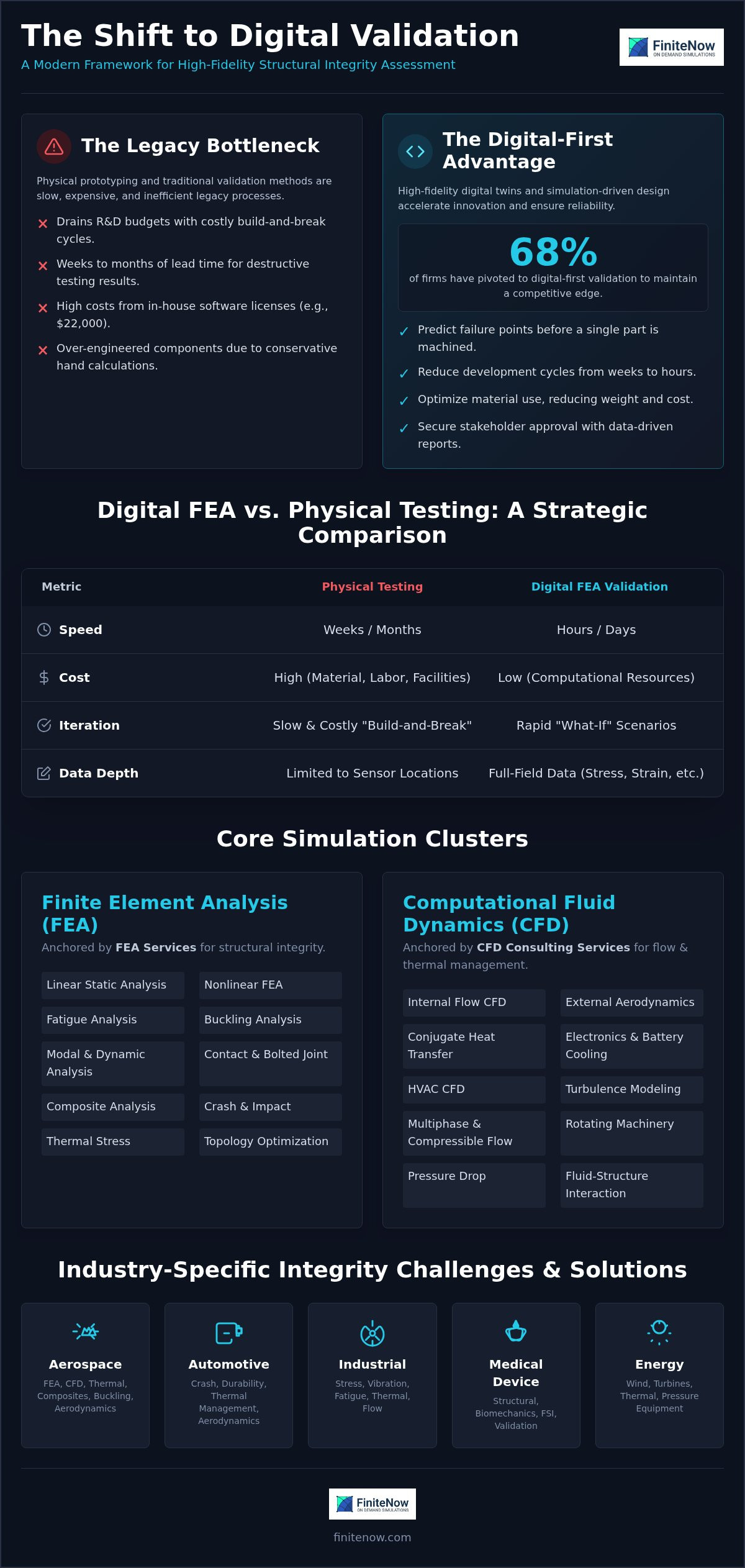
Industry-Specific Integrity Challenges and Solutions
Every industry operates under a unique set of regulatory constraints and physical environments. A structural integrity assessment FEA is the primary tool for navigating these complexities, transforming abstract safety requirements into verifiable data. Whether you’re securing certification for an airframe or meeting protocols for a medical implant, the validation framework must be vertical-specific. It’s not just about finding the breaking point; it’s about proving compliance within the precise margins defined by your sector. For a comprehensive overview of how these simulations fit into your 2026 R&D roadmap, see our Engineering Simulation Strategic Guide.
Aerospace and Automotive: Light-weighting and Durability
Aerospace engineering demands absolute precision in composite analysis and buckling stability. Modern airframes use advanced laminates that require specialized mesh refinement to capture inter-laminar shear stresses accurately. If the digital model doesn’t account for these subtle failure modes, the physical component won’t survive the certification phase. In the automotive sector, the focus has shifted toward high-fidelity crash simulation and impact analysis for EV battery enclosures. These components must withstand extreme deformation without compromising the internal cells. We often integrate structural feedback with CFD simulation to ensure that aerodynamic loads and thermal management systems don’t induce unexpected vibrations or fatigue. This multi-physics approach is the only way to ensure total system integrity in high-performance vehicles.
Medical Devices and Industrial Machinery
The medical device vertical requires biomechanics simulation to validate stent fatigue life and orthopedic implant durability. Regulatory compliance hinges on proving that devices can survive millions of cycles within the human body without fracture. Specialized fatigue solvers are used to model the unique stress states of nitinol and other biocompatible alloys. Industrial machinery, however, focuses on the stability of heavy equipment under operational loads. This involves rigorous vibration analysis, thermal stress evaluation, and bolted joint analysis to prevent catastrophic failure in manufacturing environments. In the energy sector, we prioritize pressure equipment integrity according to the 2025 ASME BPVC. We also model wind turbine blade fatigue to ensure long-term reliability in harsh offshore conditions. To ensure your components meet these rigorous standards with German-based expert validation, submit your structural integrity assessment FEA project for an instant quote.
Implementing On-Demand Structural FEA with FiniteNow
Legacy consulting models are built on billable hours and manual negotiation. This slow-moving approach is incompatible with the rapid R&D cycles of 2026. FiniteNow disrupts this standard by providing a scalable platform for on-demand structural validation. You don’t need to navigate complex software licenses or commit to long-term contracts to ensure your components are safe. A professional structural integrity assessment FEA is now accessible through a streamlined digital interface that prioritizes your project’s technical rigor and delivery speed. Precision is our baseline. Speed is our priority.
The Instant Quote and German Engineering Advantage
Procurement shouldn’t be a bottleneck for engineering managers. Our automated quoting system removes friction by providing transparent, project-based fees based on your specific simulation requirements. This system is backed by a German-based engineering team that ensures every analysis meets the highest standards of precision. We leverage a network of pre-qualified suppliers to handle specialized domains like Multiphysics or Fluid-Structure Interaction (FSI). If your boundary conditions are complex, you can collaborate directly with our experts via video calls to refine the model before the solver starts. This collaborative approach ensures that the digital twin accurately reflects your real-world operating environment.
From CAD Upload to Professional FEA Report
The path from a CAD model to a validated design is fast and highly structured. You simply upload your geometry and define your load cases to receive an instant quote. Once approved, our team executes the simulation using the latest solvers, such as Abaqus 2026 or Ansys 2026 R1. The result is a high-fidelity structural integrity assessment FEA report that includes detailed stress plots, failure analysis, and actionable design recommendations. These reports are designed for stakeholder approval, providing the data-driven confidence needed to move into production without the risk of late-stage failures. We’ve optimized every step of the professional validation process to value your time and intellectual rigor.
Get an instant quote for your structural FEA project and transform your validation strategy today.
Accelerating Design Cycles with Digital-First Validation
The transition from physical “build-and-break” cycles to high-fidelity simulation is no longer optional for competitive engineering firms. By integrating a rigorous structural integrity assessment FEA into your R&D pipeline, you eliminate the uncertainty of traditional hand calculations and the prohibitive costs of redundant prototyping. You’ve seen how specialized nonlinear and fatigue analyses provide the data depth required for 2026 regulatory standards across the aerospace, automotive, and medical sectors.
FiniteNow offers a faster, more transparent alternative to legacy consultancies. You gain immediate access to German-based engineering expertise and on-demand scalability without the burden of expensive software licenses or long-term contracts. Our platform provides instant, project-based pricing to keep your procurement process as agile as your engineering team. It’s time to replace legacy bottlenecks with a streamlined digital execution strategy that prioritizes precision and speed.
Get an Instant Quote for Your Structural FEA Project and secure the technical validation your stakeholders demand. Your next innovation deserves the precision of professional simulation.
Frequently Asked Questions
What is a structural integrity assessment in FEA?
A structural integrity assessment FEA is a digital simulation that evaluates if a component can withstand its operating loads without catastrophic failure. It uses mathematical models to predict stress, strain, and deformation across complex geometries. This process identifies potential failure modes like yielding, buckling, or fatigue before physical production begins. It’s a foundational step in modern engineering that ensures safety while allowing for material optimization and significant weight reduction in your final design.
How accurate is FEA compared to physical structural testing?
High-fidelity FEA achieves exceptional accuracy when boundary conditions and material properties are precisely defined. While physical testing measures specific points with sensors, FEA provides full-field data across the entire geometry. It captures local stress concentrations that physical strain gauges might miss entirely. In 2026, professional simulations often correlate within 1% to 5% of physical test results, provided that mesh convergence studies and validation standards like ASME V&V 10 are strictly followed.
Which industries require high-fidelity structural FEA?
Regulated sectors including aerospace, automotive, medical devices, and energy rely on these assessments for safety validation. Aerospace engineers use it for airframe buckling and composite analysis. The automotive industry applies it to crashworthiness and battery enclosure durability. Medical device manufacturers require it for biomechanics and implant longevity. Industrial machinery and energy sectors use it to verify pressure vessels and turbine blades under extreme operational loads. This cross-industry application ensures compliance with international safety standards.
Can FEA predict the fatigue life of a medical device or automotive part?
Yes, specialized fatigue solvers calculate the number of cycles a part can endure before crack initiation occurs. For medical devices like stents, this involves simulating millions of cycles to meet FDA or CE requirements. In automotive engineering, fatigue analysis predicts the durability of suspension components or chassis frames under repetitive road loads. These simulations account for material S-N curves and mean stress effects to ensure long-term structural reliability and prevent premature field failures.
What information is needed to get an instant quote for an FEA project?
You need to provide the CAD geometry, material specifications, and a clear description of the load cases. Our automated system evaluates project complexity based on the type of analysis required, such as linear static, nonlinear, or thermal stress. Defining your boundary conditions and expected deliverables helps ensure transparent pricing. Once you upload your files, the platform generates a project-based fee without the need for manual negotiation or expensive annual software licenses.
How does FiniteNow handle nonlinear structural analysis for complex assemblies?
We utilize advanced solvers like Abaqus 2026 to manage large deformations and contact nonlinearities between parts in an assembly. Our German-based team specializes in defining complex interactions, such as friction in bolted joints or the plastic behavior of metals during impact. We refine the mesh at critical interfaces to ensure convergence and accuracy. This methodical approach allows us to validate the structural integrity of entire assemblies under peak operating pressures and dynamic loads.
Is an FEA report sufficient for regulatory compliance in aerospace or medical sectors?
An FEA report is a critical component of the technical file, but it usually complements physical testing for final certification. Regulatory bodies like the FAA or FDA require documented verification and validation to prove the simulation accurately reflects reality. A high-fidelity structural integrity assessment FEA reduces the volume of physical tests needed by identifying the most critical areas for sensor placement. It ensures your final physical validation is a confirmation of success rather than discovery.
What are the benefits of outsourcing FEA vs. hiring in-house simulation engineers?
Outsourcing provides on-demand access to specialized expertise and high-end solvers without the $22,000 cost of perpetual software licenses. It eliminates the overhead of full-time staffing and internal training. You gain the flexibility to scale simulation capacity based on project volume. FiniteNow offers a transparent, project-based model that delivers expert-validated reports faster than traditional legacy consultancies. This allows your core team to focus on design and innovation while we handle the technical validation.
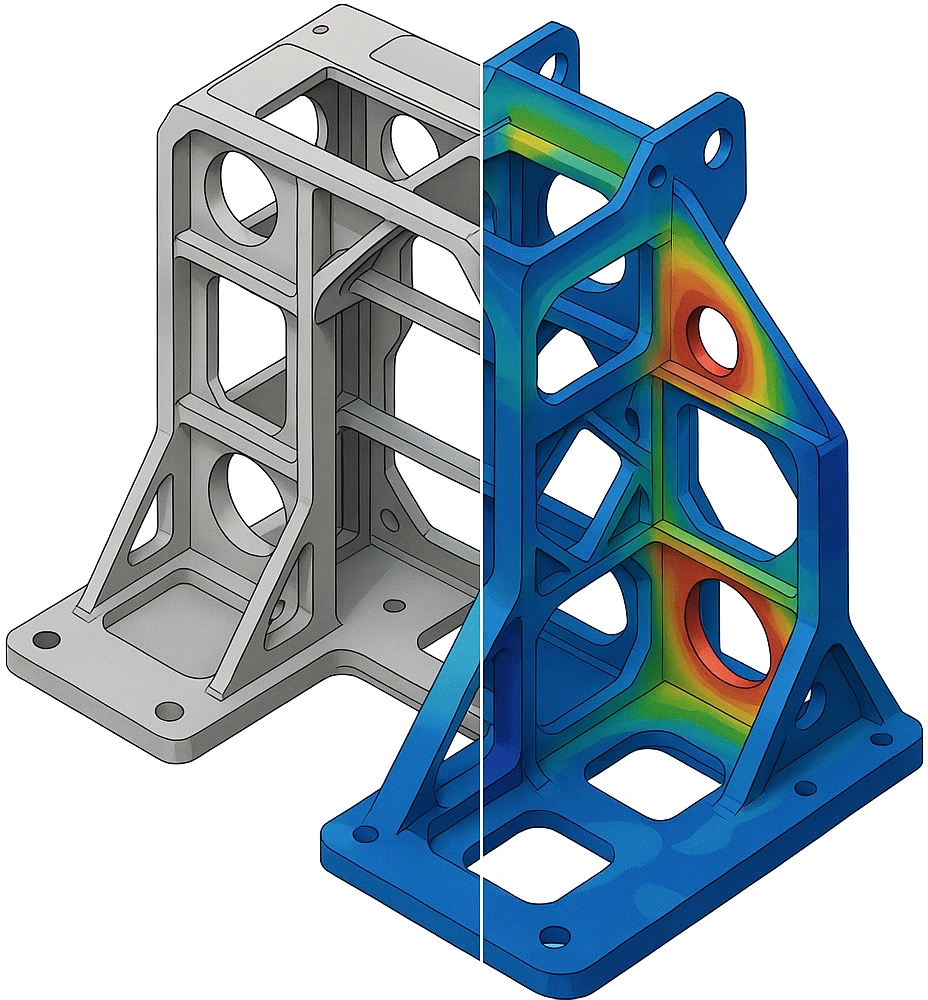
Simulation Work Reinvented