
Traditional engineering consulting has become a friction point that your R&D schedule can no longer afford. While the precision of German manufacturing remains a global benchmark, the legacy delivery model for technical analysis is often stuck in the past. You’ve likely felt the sting of waiting weeks for a simple project quote or managing the overhead of high cost simulation software licenses that sit idle. It’s a common struggle for managers in the automotive and aerospace sectors who need reliable data without the administrative drag.
We understand that inconsistent quality from low-cost outsourcing isn’t a viable alternative when your product’s validation is on the line. This guide demonstrates how modern German engineering simulation services combine traditional mechanical rigor with a digital-first speed to accelerate your development cycles. You’ll discover how to access validated FEA and CFD results through a transparent, project-based framework that prioritizes your timeline. We’re moving beyond the basics to show you how on-demand CAE provides a faster path to market for industrial machinery and medical device innovation.
Key Takeaways
- Learn how to transition from capital-intensive software licensing to a flexible, operational-expense model for your CAE requirements.
- Discover how modern German engineering simulation services leverage digital-first workflows to provide validated results faster than legacy consulting firms.
- Identify technical requirements for complex structural FEA and CFD projects across aerospace, automotive, and medical device verticals.
- Compare the efficiency of instant automated quoting against traditional two-week bidding cycles to reduce your R&D lead times.
- Understand the collaborative process of working with a German-based engineering team through streamlined digital workflows and CAD-integrated platforms.
The Evolution of German Engineering Simulation Services
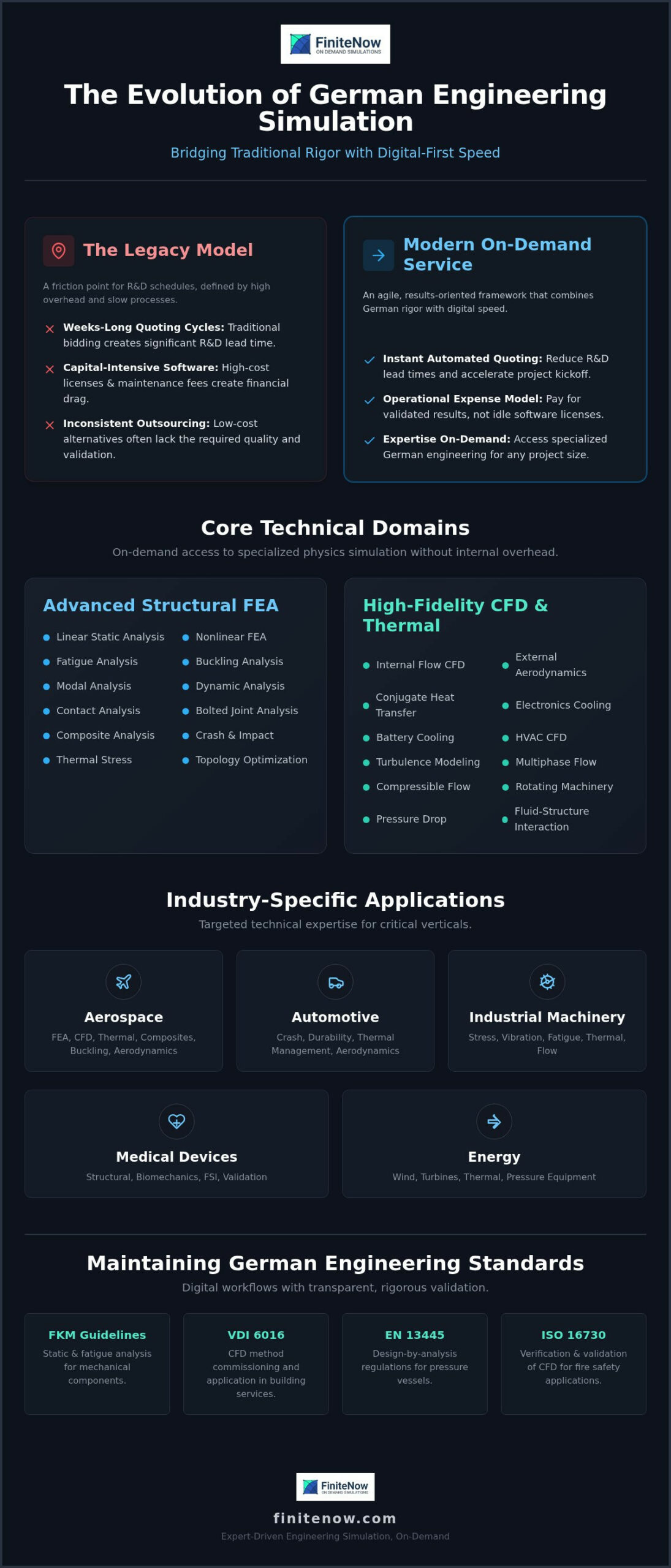
The German manufacturing sector contributes 26.6% of national gross value. This massive output demands a level of technical validation that traditional consulting models often struggle to match. Historically, accessing high-tier Computer-Aided Engineering (CAE) meant investing in expensive, perpetual software licenses and specialized on-site staff. By 2026, this capital-intensive approach has been replaced by a more agile, results-oriented framework. German engineering simulation services have transitioned into an operational-expense-driven model that prioritizes speed and data accuracy over software ownership.
From Software Ownership to Results-Based Consulting
Owning a software license is often a liability for modern R&D. High maintenance fees and the need for constant hardware updates create significant overhead. Many firms find that their internal CAE departments are either over-capacity or under-utilized. Simulation-as-a-Service solves this by providing on-demand access to specialized expertise. This shift allows engineering managers to focus on product innovation rather than license management. Cloud-based platforms now enable complex physics to be solved in hours, not days. It’s a move from maintaining a tool to buying a validated answer. This digital transformation has effectively removed the need for on-site simulation staff, allowing companies to scale their engineering capacity without increasing their headcount.
Maintaining German Engineering Standards in a Digital Workflow
The reputation of German engineering is built on precision and rigorous validation. Moving to a digital-first service model doesn’t change these requirements. It actually makes compliance more transparent. Standardized workflows ensure that every project adheres to critical industry benchmarks. Remote teams use these standards to deliver high-fidelity documentation that stands up to global scrutiny. By leveraging a pre-qualified supplier network, companies can access niche expertise for specific physics without traditional barriers. This methodical approach ensures that German engineering simulation services remain a global benchmark for reliability. Key standards that define this digital workflow include:
- FKM Guidelines: The standard tool for the static and fatigue analysis of mechanical components using stresses derived from FEA.
- VDI 6016: Requirements for the commissioning and application of CFD methods in building services to ensure traceability.
- EN 13445: Regulations governing the design-by-analysis approach for pressure vessels, a common requirement in German plant engineering.
- ISO 16730: Guidelines for the verification and validation of CFD simulations in fire protection and safety applications.
These protocols guarantee that the transition to on-demand CAE doesn’t sacrifice quality. Instead, it provides a faster, more reliable path to product validation for industries ranging from aerospace to medical devices.
Core Technical Domains: FEA, CFD, and Thermal Analysis
Engineering precision requires high-fidelity validation across multiple physics domains. German engineering simulation services provide the technical depth necessary for complex product development. Transitioning to an on-demand model allows you to access these specialized domains without the overhead of internal software maintenance. This approach ensures that every design iteration is backed by rigorous data, from individual components to massive mechanical assemblies.
Advanced Structural FEA Capabilities
Structural integrity depends on how assemblies behave under diverse load cases. While linear static analysis addresses basic stress checks, nonlinear FEA is essential for high-performance mechanical systems. This includes material nonlinearity, geometric changes, and complex contact analysis. Advanced workflows also incorporate fatigue analysis and buckling analysis to predict long-term durability. For specialized applications, bolted joint analysis and composite analysis ensure that every fastener and material layer meets safety margins in medical device validation or aerospace structures. Dynamic analysis further validates performance under vibration or impact, providing a complete picture of structural behavior.
High-Fidelity CFD and Thermal Management
Managing fluid and gas dynamics is critical for efficiency and safety. CFD simulation covers both internal flow CFD for machinery and external aerodynamics for automotive or aerospace components. High-fidelity modeling includes turbulence modeling and pressure drop calculations to refine performance in energy systems and industrial machinery. Thermal analysis has become a cornerstone of modern R&D, particularly conjugate heat transfer (CHT) for electronics cooling and battery cooling. For complex multiphysics, fluid-structure interaction (FSI) simulates how fluid forces deform solid structures in real-time, which is vital for designing turbines and medical implants.
Multibody dynamics (MBD) complete the technical suite by simulating the motion of constrained mechanical systems. This analysis identifies peak kinetic loads and kinematic behavior that static snapshots cannot capture. Integrating these physics domains ensures a holistic view of your product performance before any physical prototype is built. You can access these advanced simulation capabilities through a streamlined digital interface that provides instant project quotes and removes traditional barriers to high-end engineering expertise.
Legacy Consulting vs. Modern Simulation-as-a-Service
Traditional engineering consulting is built on a model that prioritizes billable hours over project velocity. This structure often creates a disconnect between the consultant’s incentives and your R&D deadlines. Modern German engineering simulation services have disrupted this paradigm by shifting toward a “Simulation-as-a-Service” model. Instead of dealing with opaque hourly rates, you benefit from pay-per-project engineering simulation. This transparency allows for predictable budgeting and eliminates the financial risk associated with scope creep. It’s a results-oriented approach that aligns with the speed of modern manufacturing.
Breaking the Bidding Bottleneck
Standard procurement cycles for engineering services often take two to three weeks just for the bidding phase. This bidding bottleneck halts development momentum and delays critical decision-making. In contrast, modern platforms use automated quoting to deliver pricing in minutes rather than days. This speed enables true scalable engineering simulation that adapts to your fluctuating R&D demands. You don’t need long-term contracts to access high-level expertise. You simply upload your CAD data, define the physics, and move directly to the analysis phase. This agility is essential for industries like medical devices and automotive, where time-to-market determines market share. By removing administrative friction, you keep your engineers focused on innovation rather than paperwork.
Reliability and IP Protection
Data security is a primary concern in a digital-first engineering environment. High-performance partners utilize encrypted workflows to ensure your intellectual property remains protected throughout the simulation lifecycle. While low-cost outsourcing often results in inconsistent quality and documentation, working with a German-based core engineering team provides the validation required for global safety standards. The financial impact is significant when reducing physical prototyping costs through high-fidelity modeling. Digital twin simulations are currently used to reduce physical prototyping costs by up to 70% in advanced industrial sectors. Comparing internal staffing costs against project-based services reveals that on-demand CAE offers a more efficient path to validated results. You avoid the burden of software maintenance, high hardware costs, and fixed salaries. This methodical progression ensures that every Euro spent on simulation contributes directly to a validated product design.
Industry-Specific Applications for German Engineering Simulation
High-performance engineering requires more than generic analysis. It demands a deep understanding of industry-specific physics and regulatory constraints. German engineering simulation services provide this specialized expertise by applying rigorous validation protocols to complex vertical challenges. Whether you’re optimizing a carbon-fiber wing spar or validating a cardiovascular implant, the focus remains on delivering data that is both accurate and actionable. This methodical approach ensures that your R&D efforts meet the highest global standards for safety and efficiency.
Aerospace and Automotive Performance Optimization
Aerospace R&D focuses heavily on weight reduction and structural stability. Engineers utilize FEA to analyze composites and buckling behavior in airframe components. High-speed aerodynamics simulation is equally critical for reducing drag and ensuring stability across flight envelopes. In the automotive sector, the shift toward electrification has introduced new technical hurdles. Crashworthiness and durability remain foundational, but thermal management for EV battery packs and power electronics is now a primary focus. Simulation allows teams to analyze thermal stress in power modules, ensuring long-term reliability for electric vehicle fleets. By modeling these interactions digitally, you can optimize aerodynamic performance for reduced energy consumption without the need for multiple wind tunnel sessions.
Medical and Industrial Machinery Precision
Medical device innovation relies on precise biomechanics and structural validation. Regulatory compliance requires rigorous data for orthopedic and cardiovascular implants. Engineers perform stent fatigue life predictions and fluid-structure interaction (FSI) analysis to ensure device longevity within the human body. These validated results are essential for navigating the complex path to market approval. In the industrial machinery sector, the focus shifts to vibration and modal analysis. High-cycle rotating machinery requires careful fatigue life prediction to prevent catastrophic failure. You can utilize turbulence modeling to optimize chemical process engineering or analyze flow-induced stress in pressure vessels. Adhering to the FKM guideline ensures that your fatigue analysis for mechanical components meets recognized German engineering standards. This precision reduces the risk of field failures and extends the operational life of your equipment.
Accessing these specialized insights no longer requires a massive internal infrastructure. You can upload your CAD models to FiniteNow to receive an instant quote and begin collaborating with a German-based engineering team on your industry-specific simulation requirements.
How to Engage German Engineering Expertise via FiniteNow
Engaging professional German engineering simulation services shouldn’t involve a two week bidding cycle or opaque pricing structures. FiniteNow has optimized the engagement path to match the speed of modern digital R&D. This process is designed for engineers and procurement managers who value precision but refuse to be slowed down by administrative friction. It’s a methodical workflow that moves your project from CAD data to validated results without the traditional overhead of legacy consulting models. By prioritizing transparency and technical mastery, the platform ensures that complex problems are handled with streamlined precision.
The Instant Quoting Process
The platform eliminates the bidding bottleneck by using an automated quoting system that respects your project’s urgency. You start by uploading your CAD models in standard formats such as STEP, IGES, or Parasolid. Once the geometry is in the system, you define your specific physics requirements across domains like structural FEA, CFD simulation, or thermal analysis. The automated system analyzes the project complexity, including mesh density and required solver time, to generate a transparent, project-based quote in minutes. This removes the need for long term contracts and allows you to move from a quote to project execution in hours rather than weeks. It’s a scalable approach that supports fluctuating R&D demands without the financial burden of CAE software maintenance or fixed internal staffing costs.
Collaboration and Results Delivery
Effective simulation requires more than just raw computing power; it requires expert human oversight and clear communication. Once your project is active, you collaborate directly with a German based engineering team through digital workflows and video calls. This isn’t a “black box” service. You engage with specialists to ensure the simulation captures the specific boundary conditions, material properties, and physics of your real world application. This high performance partnership ensures that every design iteration is grounded in data and logical processes.
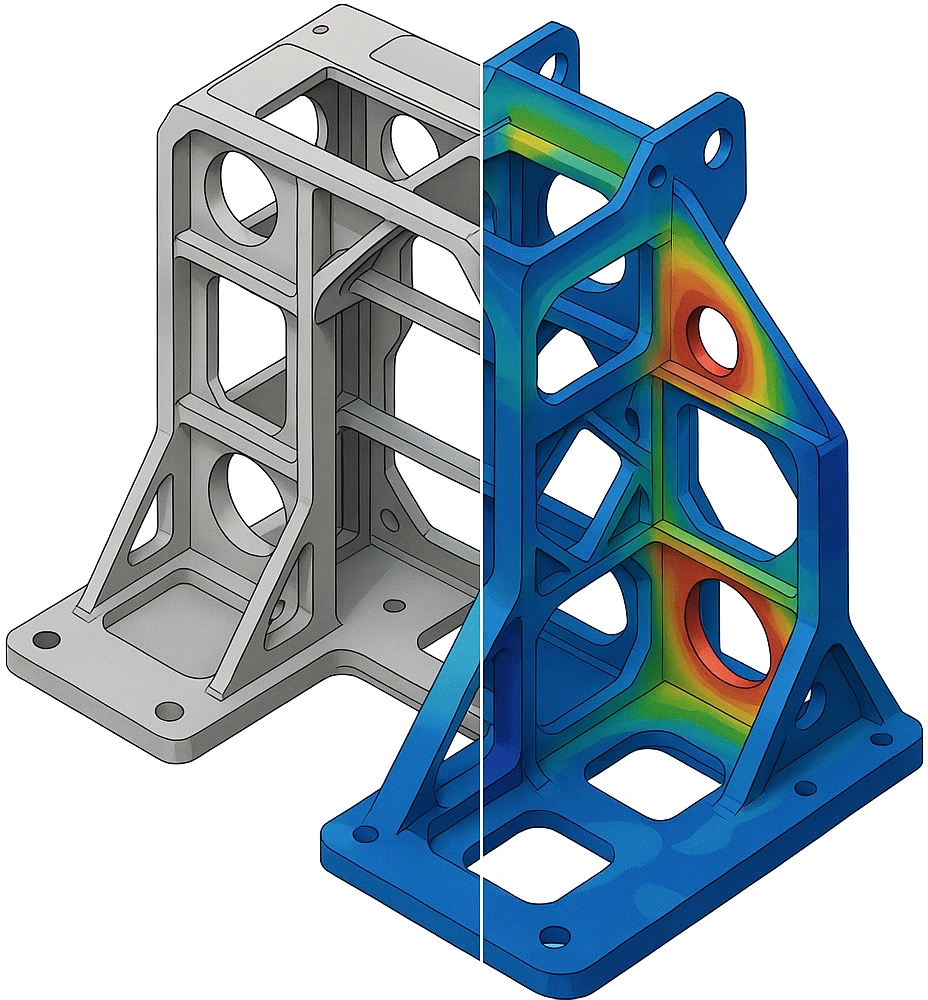
Delivery consists of high fidelity FEA or CFD reports that provide the validation required for certification and internal audits. These documents include detailed stress plots, flow streamlines, and safety factor calculations, providing a permanent record of design performance. You receive the technical documentation necessary to support regulatory compliance in industries like medical devices, aerospace, and automotive. This data allows your team to iterate designs based on simulation driven insights, significantly reducing the need for expensive physical prototypes. Every step of the interaction is optimized for speed, reliability, and intellectual rigor, ensuring that your R&D momentum is never compromised by administrative delays.
Modernizing Your R&D with Digital-First CAE
The shift from capital-intensive software ownership to agile, results-based consulting is no longer a trend; it’s a competitive necessity. By choosing modern German engineering simulation services, you eliminate the administrative drag of traditional bidding cycles and the overhead of idle licenses. You’ve seen how high-fidelity FEA and CFD results can reduce physical prototyping costs while ensuring compliance with rigorous standards like the FKM guideline. This methodology prioritizes data accuracy and operational efficiency for every design iteration.
FiniteNow connects you directly with German-based engineering expertise through a streamlined, digital interface. You don’t have to wait weeks for a quote or struggle with inconsistent quality from low-cost outsourcing. Instead, you get validated results and instant automated quoting that drive your product development forward. Get an instant quote for your engineering simulation project today and experience a faster path to market. Your next innovation deserves the reliability of a specialist who values your time and intellectual rigor.
Frequently Asked Questions
What are the benefits of hiring a German engineering simulation service?
Hiring German engineering simulation services ensures your R&D projects meet the highest technical standards for precision and validation. You benefit from a methodical approach that prioritizes mechanical rigor and data accuracy. This expertise is critical for navigating complex safety regulations in aerospace and automotive sectors. Using a German based team provides a layer of reliability that low cost outsourcing cannot match, ensuring your simulation reports are ready for global certification and audit requirements.
How do on-demand simulation services differ from traditional consulting?
On-demand simulation services prioritize project velocity and cost transparency over the billable hour model used by traditional consulting firms. Instead of waiting weeks for a manual bid, you receive instant project based pricing. This model eliminates the bidding bottleneck and long term contract requirements. You gain a scalable resource that adapts to fluctuating R&D schedules, providing high fidelity results through a streamlined digital workflow rather than opaque and slow legacy processes.
Can I get an instant quote for complex FEA or CFD projects?
Yes, the FiniteNow platform utilizes an automated system to generate instant quotes for both structural FEA and CFD simulation projects. By uploading your CAD models and defining specific physics requirements, the system analyzes complexity and mesh requirements to provide immediate pricing. This removes the administrative friction typically associated with procurement. You can move from initial project scoping to execution in hours, ensuring your development timeline remains on schedule without unnecessary delays.
Is it possible to outsource engineering simulation without software licenses?
Outsourcing your analysis allows you to bypass the high cost of simulation software licenses and internal hardware maintenance. FiniteNow provides a results oriented service where you pay only for the validated simulation data you need. This operational expense model removes the burden of managing complex software environments or training specialized staff. You access advanced CAE capabilities on-demand, allowing your internal team to focus on product innovation while we handle the technical execution.
How does FiniteNow ensure the quality of simulation results?
Quality is maintained through a core German based engineering team that oversees every project alongside a network of pre-qualified suppliers. We follow established technical standards, such as the FKM guideline for fatigue analysis and VDI 6016 for CFD. Every simulation is validated against your specific boundary conditions and material properties. This methodical progression ensures that the high fidelity reports we deliver are accurate, documented, and suitable for critical engineering decision making and regulatory compliance.
What industries benefit most from high-fidelity engineering simulation?
High fidelity simulation is essential for industries with complex safety and performance requirements. Aerospace firms utilize it for composites and buckling analysis, while automotive companies focus on crashworthiness and EV thermal management. Medical device manufacturers rely on validated biomechanics for cardiovascular or orthopedic implants. Additionally, the industrial machinery and energy sectors use these services for vibration, fatigue life prediction, and turbulence modeling. Any vertical requiring rigorous validation without physical prototyping benefits from this digital-first approach.
How do you handle data security and intellectual property during simulation?
Data security is a foundational element of our digital-first workflow. We use encrypted platforms to handle all CAD data and simulation results, ensuring your intellectual property remains protected throughout the engagement. As a German based service provider, we adhere to strict data protection standards that prioritize client confidentiality. You maintain full ownership of your designs and the resulting analysis documentation, providing a secure environment for sensitive R&D projects across all technical domains.
What is the typical turnaround time for a project-based simulation?
Turnaround times are significantly faster than traditional consulting models because we eliminate the initial two week bidding cycle. While the duration depends on the complexity of the physics and mesh requirements, our streamlined digital workflow is designed for speed. Simple linear static checks are delivered rapidly, while complex multiphysics projects like fluid-structure interaction follow a methodical yet accelerated schedule. You collaborate directly with experts to ensure milestones are met without administrative delays.
Simulation Work Reinvented